



From the mountains of Boulder, Colorado to the biggest stages in electronic music, Amél’s journey is rooted in freedom, emotion, and a deep connection to sound.
Mentored by Afrojack and now part of the WALL Recordings family, he has quickly carved out his own space with cinematic melodies and expansive, euphoric productions.
From the highly anticipated “Our Time” with David Guetta and Martin Garrix to his reimagining of Billie Eilish’s “Birds of a Feather,” Amél is proving that his sound belongs on stages around the world—while staying grounded in the nature and curiosity that inspired him from the beginning.

Growing up in Boulder, Colorado, how much did the natural landscape of your hometown shape the ‘open world’ sound and cinematic atmosphere we hear in your music today?
It’s funny, for the longest time I didn’t even think much of my environment growing up, it was just the place I lived. But as I’ve grown older, I’ve come to appreciate Boulder on a whole new level.
I love the nature, the sun, and the mountains. I think there’s a certain ‘freedom’ that can be heard in my melodies/sounds that reflects the spot I grew up in.
Finding out about production after high school opened a “whole new world” for you. What was the steepest part of the learning curve during those early days?
Learning about electronic music production blew me away – the idea that I had a whole orchestra at my fingertips was such a lightbulb moment for me.
In the early days, the trickiest part was the sheer knowledge base… There are so many things to learn about in EDM production. Especially in the beginning, there are so many terms you don’t know, it can be tough to know what to even look up when you don’t have the vocabulary yet.
Being a part of the Wall Recordings family is a major milestone. What is the most valuable piece of advice you’ve picked up from the team there?
Being part of the WALL team has been a dream come true. One of the biggest assets I have available through that is mentorship from Afrojack.
It might be a bit of a bland answer, but some of the best things I’ve picked up from him are actually the most simple:
Use reference tracks, study what sounds other producers are using, set a goal, a ‘target’ of what you want to create before you dive in blindly to a new production…
Oftentimes the simplest and most foundational pieces are the ones we overlook, and having Afrojack there as a constant reminder of that is incredibly helpful.
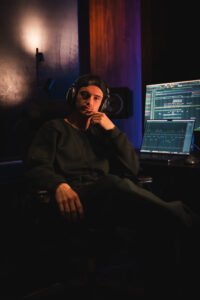
Working with legends like Guetta, Garrix, and Afrojack is a masterclass in itself. What is the biggest lesson you learned about “stadium-sized” production during the making of this track?
Working with idols like Guetta, Garrix and Afrojack is a dream come true. One of my biggest take-aways from working with them is seeing how much time and effort goes into their productions. On ‘Our Time’ specifically, I got to see Garrix going over every single little detail of the song, lyrics etc for hours and hours.
Even a week before the song released, we played the track at Ushuaia, and David comes off stage and says “When I was playing the track on stage, I could hear some mids missing in the vocal, could we change that before the song releases?” It’s those tiny details that make the top DJ’s the best in the world.
Long before the “Our Time” official release, this track was a “highly anticipated ID” at festivals like Ultra Miami 2025. What was it like seeing the internet speculate about who was on the track before your name was officially attached to it?
Working on Our Time, was one of the first times I got to see the world speculating over a track I had worked on.
Many people thought it was a remix of Sky Full Of Stars, others were guessing what artists were on the track… Coming from being an EDM fan myself just a few short years earlier, it was quite funny and mind blowing to see other fans talking about my own track in this way.
Playing at what looks like an Après-ski party in France is a huge vibe shift from a standard club. How does the energy of a mountain crowd in the snow influence the tracks you choose to play in your set?
One of the greatest lessons I’ve learned from working with Afrojack is getting to DJ in a wide range of environments. Each crowd is different, each environment is different. Even to this day I get nervous when I’m in a new environment I haven’t played before, wondering if I’m making the right decisions on what music to play etc…
But that’s how you learn and grow. Knowing what music is right for a certain crowd can only be learned through experience.
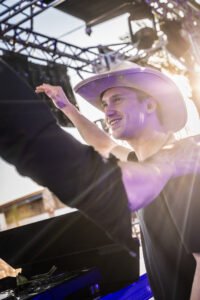
Billie Eilish’s “Birds of a Feather” is deeply emotional and atmospheric. When you sat down to remix it, how did you ensure you kept that raw vulnerability while still making it work for a high-energy stage like Tomorrowland Winter?
When I approach remixes, I always try to maintain the main feeling of the original song.
With the Billie Eilish remix especially, I knew I wanted to keep the main melody synth riff, so that was an easy place to start from. From there, it was a natural progression of finding chords that supported the emotion of the vocal, and building that up into the big euphoric melody in the drop.
Standing alongside Afrojack at a venue as iconic as Tomorrowland is a dream for many. How has your relationship with him evolved from being an artist on his label to sharing the decks and creating tracks together?
It’s been an honor working with Afrojack these last few years. He’s mentored me in music, business and life too. Playing my remix with him on the Tomorrowland mainstage was a moment I’ll always remember. It felt like one of the biggest moments of confirmation that ‘I must be doing something right.’
And to have him announce me to the world, that was quite the ‘big brother’ moment coming from Afrojack.
Apart from music, what is a hobby or activity that helps you “reset” and find fresh inspiration?
Spending so many hours alone in the studio can be draining for sure. I’ve found that movement, physical exercise etc.
Is one of the best resets for me – I make time for it these days. Also as someone who loves nature, spending time on the weekends in the mountains is one of the best ways to get my head on straight again, and is also one of my biggest sources of inspiration.
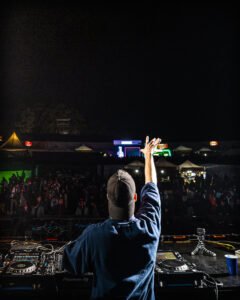
If music and medicine didn’t exist, what would you be doing with your life right now?
If music didn’t exist, I would probably be in the sky somewhere, either flying drones or helicopters. Since I was a young kid, I’ve loved anything to do with aviation. In fact, before I turned full time as a producer, I was flying drones professionally for several years.
What does “success” look like for Amél five years from now—not just in terms of numbers, but in terms of the impact you’ve made on the community?
Success for me comes in several different areas. Right now there’s certainly a part of it that’s materialistic – being able to have a stable and steady income is foundational. But beyond that, I want to create impact.
Music has been one of the biggest inspirations/healers in my own life, and knowing the impact music has had on me, I get excited thinking that my own music could also have that same impact on others. Music can bring emotions to life, bring people together, change the very frequency at which we operate.
I hope my music can bring that change to other people’s lives, as it’s done for me.
Follow Deep Waves Music: