
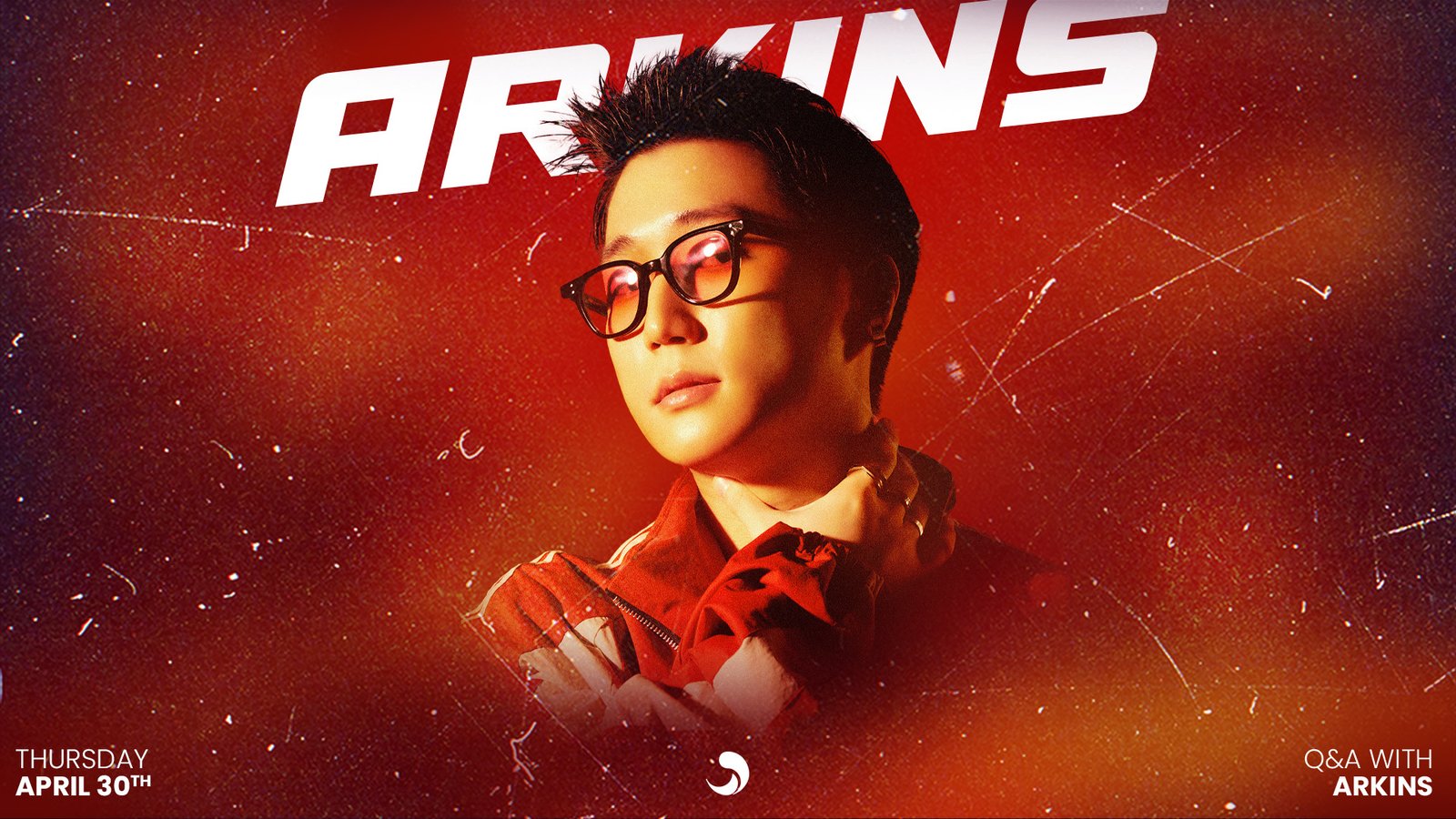

What does it take to move from an underground alias to creating a genre that dominates dance floors across Asia?
For Arkins, the journey wasn’t about overnight fame—it was about a strategic rebrand and a relentless focus on a sound now known as “Gangnam Bounce.”
We caught up with the producer to talk about his rise through the ranks of HEXAGON and Barong Family, and why he believes the gap between regional hits and global anthems is finally disappearing in 2026.
What was the “lightbulb moment” when you realized you wanted to pursue EDM production professionally?
Before becoming “Arkins,” I actually spent about seven years performing under a different alias.
During that time, I was more focused on underground music, working mainly with genres like UK Bassline, Jersey Club, Baile Funk, and toward the end of that period, Hard Dance.
At the time, it was difficult to expect significant financial returns from EDM production. However, despite the lack of financial stability, I genuinely enjoyed making music, so I continued pursuing it professionally.
The real turning point came when I rebranded myself as “Arkins.” Together with my colleagues in Korea, we developed and pushed a genre called “Gangnam Bounce” (also known as “K Bounce”), which opened up new possibilities for us.
From that point on, we started creating major trends not only in Korea but also across Japan, China, Taiwan, and Southeast Asia. As our name began to gain recognition even in Western countries, I finally became confident that this was the right path for me.
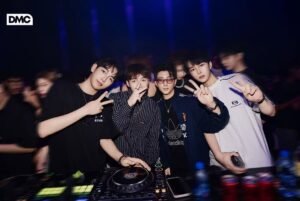
You’ve released on heavyweight labels like Barong Family and HEXAGON. How do you tailor your sound to fit such different label identities while keeping the “Arkins”
I think there is definitely a difference between the sound of “Gangnam Bounce” (also known as “K Bounce”), which is more focused on the Asian market, and the tracks I release on major international labels.
The processing, structure, and even the emotional expectations of listeners are all quite different, so I approach each accordingly.
That said, if there’s one consistent element across all of my music, it would be that it’s not overly complex and is easy to connect with.
Most of my tracks are also strongly melody-driven.
Recently, I’ve found that the gap between my Asia-focused sound and my global releases has been narrowing.
This is largely because the direction of Tech House (sometimes referred to as Minimal Bass) is becoming increasingly similar to Gangnam Bounce—both share the common characteristic of offbeat rhythms.
As a result, I feel like the distinction between my regional and global musical identity is gradually fading.
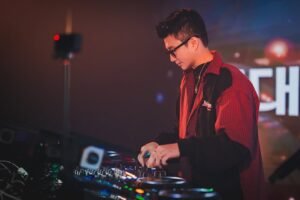
What is one piece of gear or a plugin in your studio that you absolutely cannot live without?
I currently use Ableton, and to be honest, the most important plugins for me are actually the stock plugins that come with Ableton.
I’m aware that there are many great third-party plugins out there, and I’ve tried quite a few of them, but in the end, I found that Ableton’s built-in tools suit me the best.
That said, if I had to choose one essential third-party plugin, it would be the Valhalla DSP series.
Among them, my favorite is definitely VintageVerb. When it comes to reverb plugins, it does a great job of capturing the kind of sound I’m aiming for.
As an A&R for Nowhere Nowhere, what is the #1 thing you look for when a demo lands in your inbox?
As an A&R, the first things I focus on are the overall quality of the track and its commercial potential. In particular, if a track feels too similar to existing releases, I tend to pass on it in most cases.
Because of this, even though we receive a large number of demos, we end up passing on many of them. Of course, that doesn’t mean those demos aren’t good—many of them are actually very well-produced.
However, as you know, given the nature of the nowhere nowhere label, our goal is to release tracks that feel more unique and have the potential to create a buzz.
That’s why we approach demo selection very carefully. Out of roughly 1,000 demos we’ve received, fewer than five have actually made it to release.
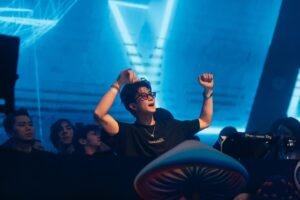
What is the most common mistake you see up-and-coming producers make when submitting music to labels?
There are many different kinds of mistakes, but rather than focusing on technical issues, I’d like to talk about mistakes in how demos are submitted.
I think a lot of up-and-coming producers send their demos to multiple labels at the same time instead of targeting a specific one.
Of course, not everyone does this, but when that happens, even if the track is good, it can make A&Rs hesitant to move forward with a release.
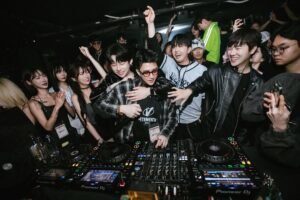
How has being an artist yourself changed the way you approach the business side of the music industry?
Before, I was mainly focused on making good music. But after gaining more experience as an artist, I started to see how important the business side is as well.
Now I understand that it’s not just about the track itself, but also about timing, positioning, and how it connects with the audience.
This perspective has made me more strategic in both my releases and collaborations.
At the same time, I still try to keep the balance—making sure I don’t lose the artistic side while understanding the business side of the industry.
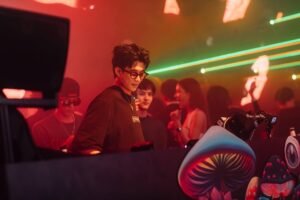
You’ve built a solid community on Instagram and Spotify. How important is “personal branding” for a producer in 2026?
I believe personal branding is extremely important. No matter how great your music is, or even if you’ve released on major labels, collaborated with big artists, or received shoutouts, it’s very difficult to grow as an artist without strong personal branding.
I think this is something many up-and-coming producers tend to overlook. For example, I often see artists wondering, “Why am I not getting booked for shows even though I’ve released on big labels or collaborated with well-known artists?”
In many cases, the issue is that they haven’t paid much attention to building their personal brand.
What has been the most surreal moment of your career so far?
I’ve never really felt that any moment in my career was surreal.
Every opportunity that comes my way quickly becomes part of my reality, so instead, I try to give my best in every moment and keep pushing forward.
(On a lighter note, after receiving these questions, I haven’t taken a single day off—I’ve completed around 30 shows, including tours in China and Japan, and produced 15 new tracks 😅 I sincerely apologize for the late response 🥲)

Can you give us a teaser about any upcoming projects or IDs we should be looking out for?
I can’t reveal the artist’s name just yet, but I have an upcoming collaboration with a well-known artist who has a hit track with over 100 million streams.
What makes it even more exciting is that the track is a 2026-style reinterpretation of a hit song by a major artist that we all know—reimagined as a new original.
I think it’s definitely something to look forward to.
Can you share a few words about Deep Waves Music?
It’s true that overseas podcasts haven’t been very active in Korea.
However, recently, Deep Waves Music has been supporting many tracks released in Korea—including several of my own—and this has been gaining attention as Korean artists continue to repost and engage with it.
I’d like to express my sincere appreciation to Deep Waves Music for leading such a positive and productive culture.

Follow Deep Waves Music: